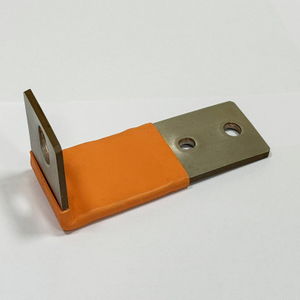
Photovoltaic Busbar
ARIDA
| Availability: | |
|---|---|
| Quantity: | |
Overview
The Photovoltaic Busbar is designed for high-current power distribution in solar inverters, combiner boxes, and DC distribution units. Made from high-conductivity copper with nickel or tin plating, it ensures low resistance and corrosion resistance in outdoor environments. The busbar can be customized with mounting holes, bends, and insulation coatings to fit specific enclosure layouts. With robust construction and compliance with PV industry standards, it supports reliable long-term operation in renewable energy systems.
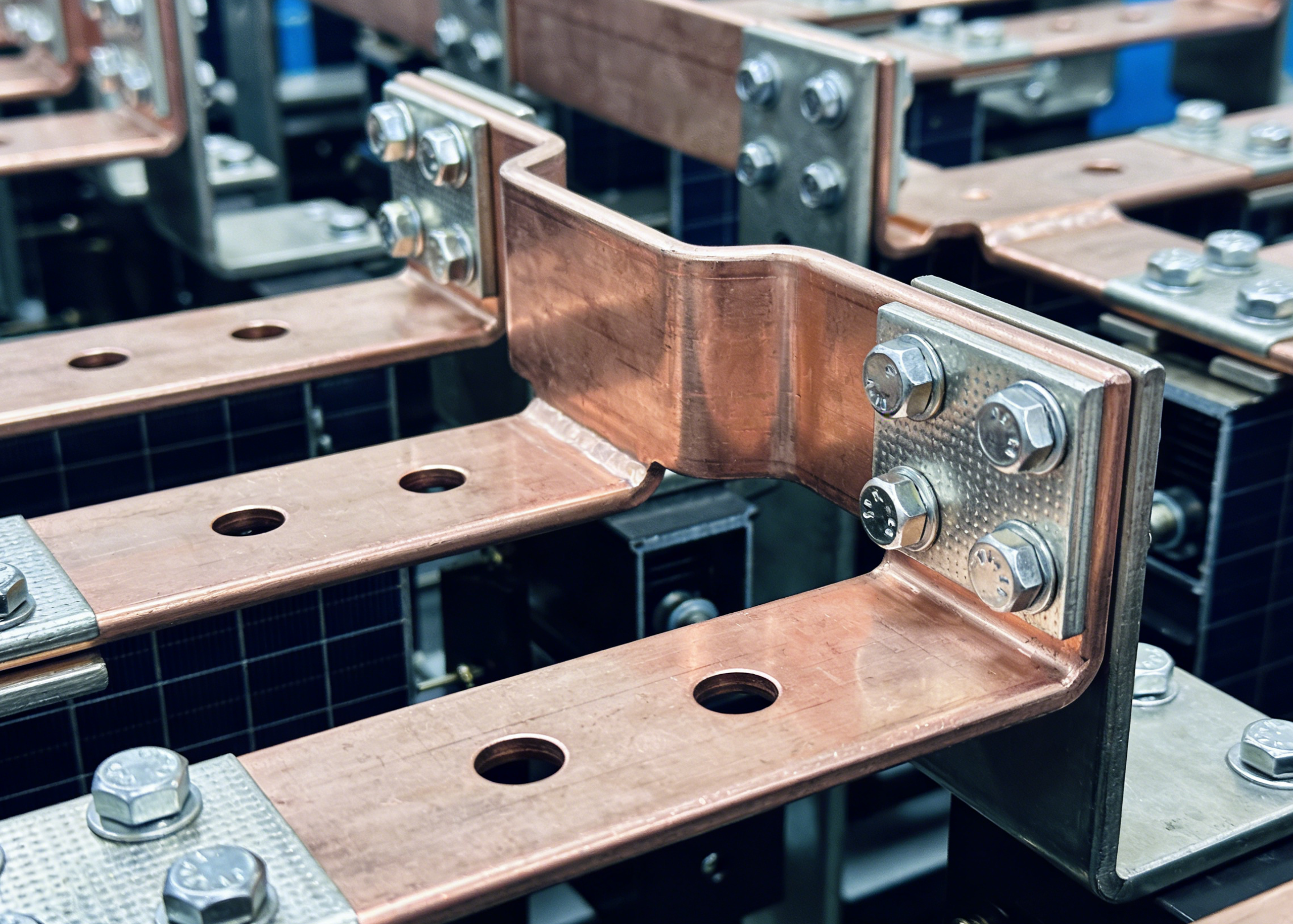
Displays a bare copper busbar without insulation. It features a precision-bent geometry and a polished, reddish-brown copper surface, which maximizes thermal conductivity and electrical efficiency. The bare design is ideal for enclosed systems, where it delivers reliable power distribution while allowing easy installation and heat dissipation.
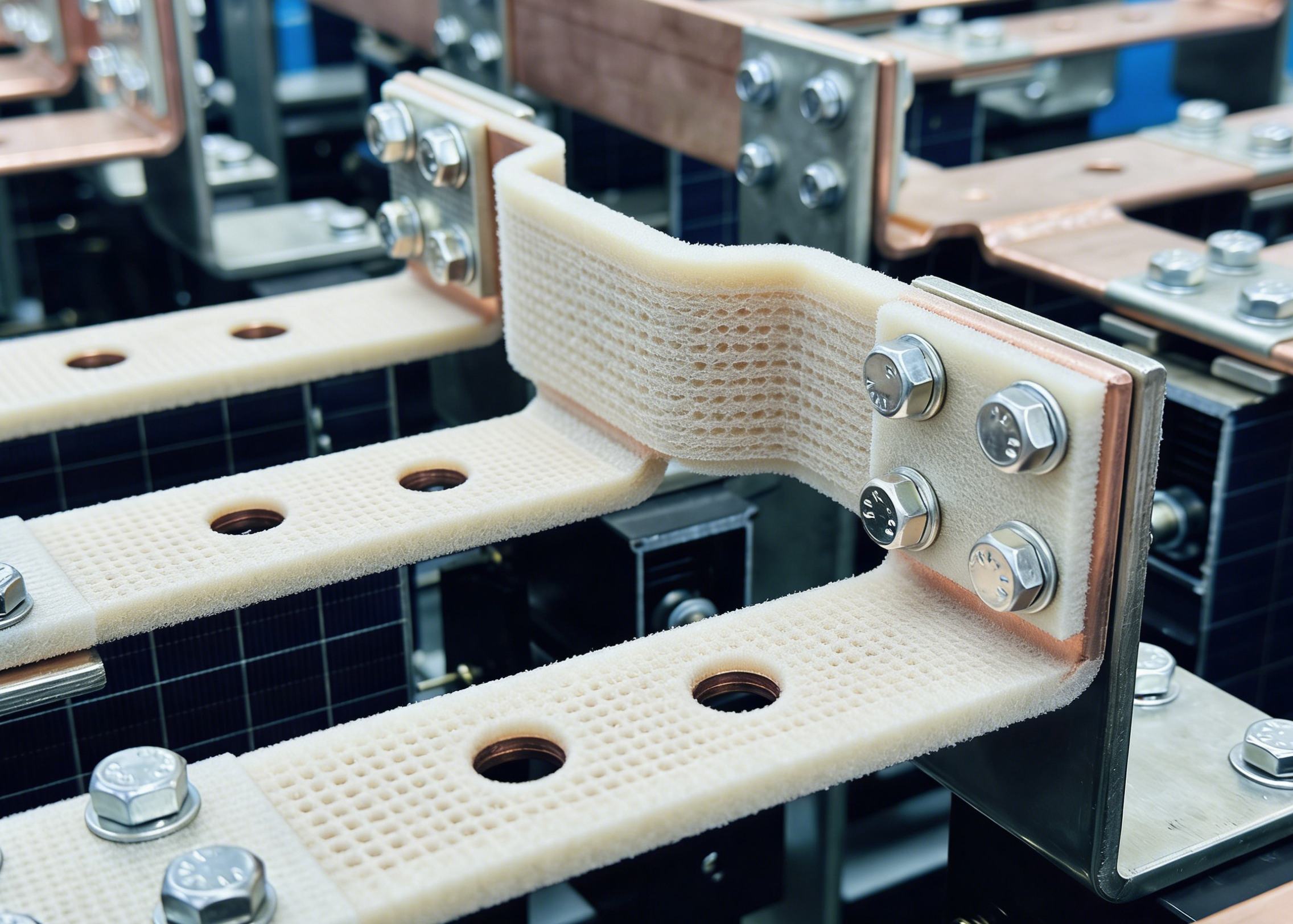
Shows a copper busbar with porous foam insulation. The beige, perforated insulation layer wraps around the copper conductor, providing electrical isolation, dust protection, and moisture resistance. It is secured with stainless steel bolts, ensuring stable high-current transmission in renewable energy systems like energy storage or solar inverters.
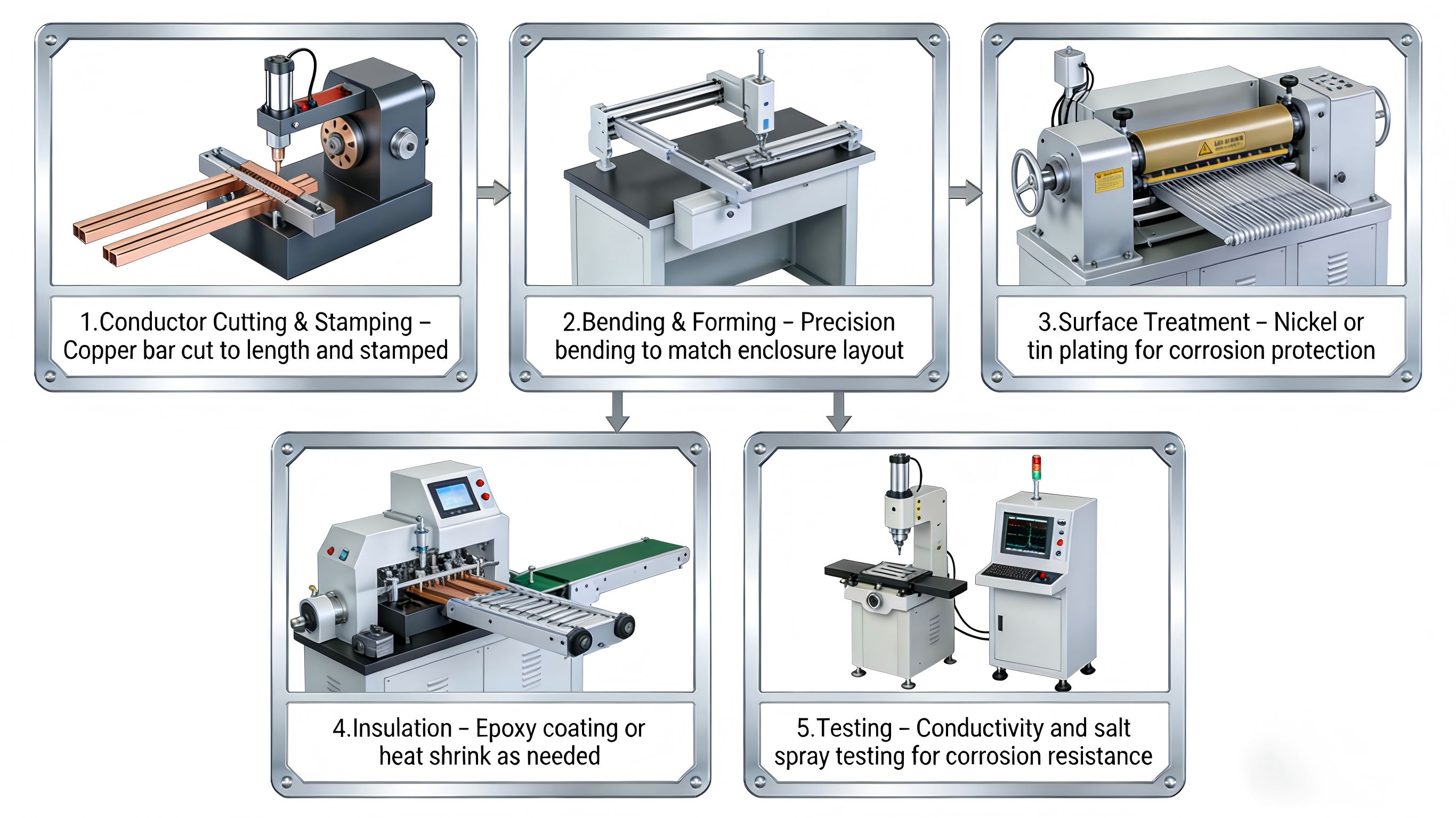
Conductor Cutting & Stamping – Copper bar cut to length and stamped.
Bending & Forming – Precision bending to match enclosure layout.
Surface Treatment – Nickel or tin plating for corrosion protection.
Insulation – Epoxy coating or heat shrink as needed.
Testing – Conductivity and salt spray testing for corrosion resistance.
| Parameter | Description |
|---|---|
| Material | Copper (C1100) |
| Plating | Nickel, tin, or silver |
| Current Rating | Up to 1000A (customizable) |
| Insulation | Epoxy powder coating, PVC, or heat shrink |
| Applications | PV combiner box, solar inverter, DC distribution |
Q: Is the busbar suitable for outdoor use?
A: Yes, with nickel or tin plating and optional insulation, it is designed for outdoor environments.
Q: Can it be used in DC applications?
A: Yes, it is specifically designed for DC power distribution in photovoltaic systems.

Overview
The Photovoltaic Busbar is designed for high-current power distribution in solar inverters, combiner boxes, and DC distribution units. Made from high-conductivity copper with nickel or tin plating, it ensures low resistance and corrosion resistance in outdoor environments. The busbar can be customized with mounting holes, bends, and insulation coatings to fit specific enclosure layouts. With robust construction and compliance with PV industry standards, it supports reliable long-term operation in renewable energy systems.
Displays a bare copper busbar without insulation. It features a precision-bent geometry and a polished, reddish-brown copper surface, which maximizes thermal conductivity and electrical efficiency. The bare design is ideal for enclosed systems, where it delivers reliable power distribution while allowing easy installation and heat dissipation.
Shows a copper busbar with porous foam insulation. The beige, perforated insulation layer wraps around the copper conductor, providing electrical isolation, dust protection, and moisture resistance. It is secured with stainless steel bolts, ensuring stable high-current transmission in renewable energy systems like energy storage or solar inverters.
Conductor Cutting & Stamping – Copper bar cut to length and stamped.
Bending & Forming – Precision bending to match enclosure layout.
Surface Treatment – Nickel or tin plating for corrosion protection.
Insulation – Epoxy coating or heat shrink as needed.
Testing – Conductivity and salt spray testing for corrosion resistance.

| Parameter | Description |
|---|---|
| Material | Copper (C1100) |
| Plating | Nickel, tin, or silver |
| Current Rating | Up to 1000A (customizable) |
| Insulation | Epoxy powder coating, PVC, or heat shrink |
| Applications | PV combiner box, solar inverter, DC distribution |
Q: Is the busbar suitable for outdoor use?
A: Yes, with nickel or tin plating and optional insulation, it is designed for outdoor environments.
Q: Can it be used in DC applications?
A: Yes, it is specifically designed for DC power distribution in photovoltaic systems.