Building robust power blocks demands careful planning. You must connect high-capacity cylindrical cells securely. Standard 18650 and 21700 cells require a strict engineering balance. You have to manage electrical conductivity and thermal output simultaneously. Assembly viability is equally critical for production lines. Poor tab selection creates dangerous hidden bottlenecks. It often leads to restricted power output. Localized heating can quickly degrade cell chemistry over time. In severe cases, it triggers catastrophic thermal runaway.
You need a highly reliable connection strategy. Your chosen connection must handle extreme loads safely. It should easily manage the maximum continuous discharge current of your Battery Management System (BMS). It also needs minimal electrical resistance. Furthermore, it must stay fully compatible with standard spot-welding equipment. Relying on guesswork here is incredibly dangerous.
We will explore exactly how to achieve this technical balance below. This guide provides a complete technical evaluation framework. You will discover how to size and configure connections properly. We will guide you through strict material selection protocols. We always prioritize your pack's safety and operational longevity. You should never compromise these factors for minor upfront cost savings.
Key Takeaways
Material verification is non-negotiable: Pure nickel (Grade N6/Ni200) is mandatory for high-drain applications; nickel-plated steel is restricted to low-power electronics.
Cross-sectional area dictates ampacity: As a baseline rule of thumb, pure nickel handles approximately 10A per 1mm² of cross-sectional area, though thermal environments alter this.
21700 cells require updated configurations: The high continuous discharge of modern 21700 cells (often 30A+) frequently exceeds the limits of standard 0.15mm single-layer strips, necessitating series stacking or copper-nickel hybrids.
Welding limits sizing: Your choice of thickness is inherently constrained by your spot welder’s joule output; soldering is not a viable alternative for cell connections.
Material Evaluation: Pure Nickel vs. Nickel-Plated Steel
Engineers categorize the solutions used for a battery tab connector into two distinct camps. You either use pure nickel or nickel-plated steel. Each material carries very distinct operational limits. You must understand these limits to prevent pack failures.
Performance vs. Risk (Pure Nickel)
Pure nickel is the gold standard for battery building. Industry specifications require a 99.6% or higher nickel content. Grade N6 or Ni200 are the most common examples. Using genuine pure nickel yields highly predictable outcomes.
It delivers incredibly low internal electrical resistance.
It provides superior, long-lasting corrosion resistance.
It generates minimal I⊃2;R heat during heavy current draws.
You absolutely require pure nickel for demanding applications. Electric vehicles rely on it for sustained high-speed driving. Heavy-duty drones need it to maintain flight stability. Professional power tools depend on it during intense torque spikes.
The Hidden Costs of Plated Steel
Nickel-plated steel tempts many beginners due to low costs. However, it carries severe hidden risks for high-power packs. The electrical resistance of steel is roughly ten times higher than pure nickel. This creates a massive problem during high-load scenarios. High resistance generates rapid, localized heating. This directly creates a severe thermal runaway risk.
You should restrict plated steel strictly to acceptable use cases. Cheap consumer electronics often use it safely. You can also use it for highly intermittent, low-draw devices. Basic portable power banks are a prime example. They rarely push enough continuous current to melt the steel.
Procurement & Verification (Trust & Validation)
Counterfeit materials flood the global supply chain constantly. Many suppliers sell plated steel disguised as pure nickel. You must learn how to detect counterfeit materials during your supplier evaluation. Visual inspections are never enough. You must perform physical tests.
Spark Testing: Take a rotary grinder to your sample strip. Grinding genuine pure nickel yields minimal sparks. They usually appear dark red and short. Grinding steel yields a massive shower of bright yellow sparks. These steel sparks branch out aggressively.
Saltwater Testing: Take a sharp tool and deeply scratch the metal surface. You want to penetrate any outer plating. Drop the scratched strip into a saline solution. Let it soak overnight. Steel rusts visibly within 24 hours. Pure nickel remains completely unaffected by the salt.
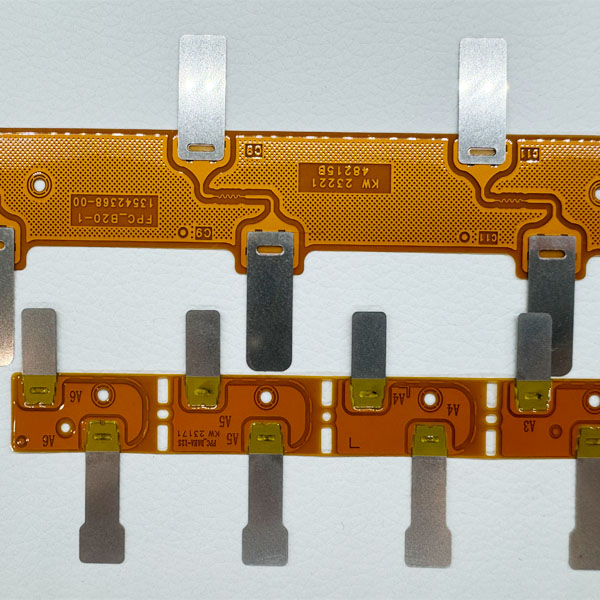
Sizing Criteria for Lithium Battery Nickel Strips
Guessing dimensions leads to immediate performance bottlenecks. You must establish a rigid sizing equation before you begin building. You base these dimensions purely on continuous discharge needs.
The Sizing Equation
You calculate the required ampacity using a simple formula. Continuous Discharge Current (A) equals your Motor/Load Power (W) divided by your Battery Voltage (V). You must cap this calculation strictly by your BMS limit. Your BMS acts as the ultimate safety bottleneck.
Determine the peak continuous wattage of your motor or device.
Divide that wattage by the nominal voltage of your battery pack.
Compare this required current against your BMS continuous rating.
Size your strips to handle whichever number is lower.
Calculating Cross-Sectional Area
You determine the current capacity by calculating the cross-sectional area. You multiply the width of the strip by its thickness. The industry relies on a heavily tested baseline standard. Pure nickel handles roughly 10 amps per 1 square millimeter of area. Plated steel only handles roughly 7 amps per square millimeter. Steel also generates significantly more heat while doing so.
Standard Sizing Limitations
Let us look at a standard lithium battery nickel strip. A typical 0.15mm by 8mm pure nickel strip has a 1.2mm² area. It supports roughly 12A to 15A continuously. However, implementation reality differs greatly from lab conditions.
You should never blindly trust theoretical ampacity charts. Real-world enclosed battery packs completely lack internal airflow. Heat resistance accumulates steadily over the physical length of the strip. The longer the series connection, the hotter it gets. You must build in safety margins.
18650 vs. 21700 Cell Geometry
Cell geometry dictates your physical strip dimensions. Older 18650 cells work perfectly with 7mm or 8mm widths. Modern 21700 nickel tabs demand a different approach. They often require much wider profiles, typically 10mm to 15mm.
You need this extra width to physically bridge the larger cell caps securely. You also need it to manage the significantly higher baseline current. High-drain cells like the Molicel P42A push 45 amps continuously. Standard narrow strips will melt instantly under this load.
High-Current Architectures: When Standard Nickel Fails
Engineers eventually hit a strict physical bottleneck. You will eventually face extreme current demands between 30A and 85A. Standard single-layer pure nickel exceeds safe thermal limits at this stage. You must upgrade your entire connection architecture.
Approach 1: The Pyramid/Stacking Strategy
Many builders rely on the pyramid or stacking strategy. You spot weld multiple layers of nickel together. You typically stack 0.15mm or 0.20mm nickel at major series junctions. This directly multiplies your effective cross-sectional area.
It allows you to use standard, easy-to-source nickel rolls.
It prevents you from needing to upgrade your spot welder immediately.
Drawback: It increases localized heat drastically during the welding of top layers. You risk burning through the bottom layer.
Approach 2: The Copper-Nickel Sandwich (Advanced)
High-end builders utilize the advanced copper-nickel sandwich technique. You use pure copper as your primary power busbar layer. Copper boasts four times the electrical conductivity of nickel. It handles massive currents effortlessly without generating heat.
You place extremely thin pure nickel strips directly over the copper layer. The thin nickel acts strictly as the weldable surface layer. It absorbs the massive heat spike from the welder probes. This heat cleanly fuses the copper beneath it directly to the cell pole.
Approach 3: Pre-Punched Copper Busbars
Industrial production lines often use pre-punched copper busbars. Manufacturers take thick industrial copper sheets and laser-cut them. They cut specific "nickel windows" directly over the battery terminals. They weld small nickel squares into these windows.
This method dominates specialized, space-constrained, high-power packs. Electric skateboards and high-speed drones utilize this heavily. It provides the ultimate conductivity of solid copper. It also retains the simple, safe manufacturing process of standard nickel welding.
Spot Welding Nickel Tabs: Hardware Constraints
Many beginners ask why they cannot simply solder their connections. The answer lies in the volatile chemistry of lithium cells.
Why Not Solder?
Applying sustained, direct heat from a soldering iron is dangerous. It rapidly damages the delicate internal chemistry of lithium cells. It degrades the internal plastic separators. This creates an immediate risk of internal short circuits.
Spot welding nickel tabs solves this thermal problem entirely. A spot welder delivers high-amperage micro-pulses in milliseconds. It limits the thermal transfer exclusively to the tab surface. The battery cell remains completely cool to the touch.
Matching Thickness to Welder Power
Your hardware severely constrains your sizing choices. You cannot weld what your machine cannot penetrate.
0.10mm to 0.15mm: These thicknesses are handled safely by entry-level machines. Prosumer capacitive discharge welders melt these layers perfectly.
0.20mm to 0.30mm: These require serious industrial-grade hardware. You need heavy pneumatic welders or high-kVA transformer welders. Household circuits often trip when firing these machines.
Quality Assurance Check
You must verify your work through physical destruction testing. A correct, safe spot weld requires 2 to 4 points per terminal. This depends heavily on the strip thickness.
Perform your standard weld on a scrap or dead cell.
Grab the welded strip firmly with a pair of pliers.
Pull the tab sharply away from the cell terminal.
The metal strip itself should tear aggressively. It must leave the actual weld points intact on the battery.
If the entire weld simply pops off cleanly, you failed. Your machine pressure was too low, or the tab is too thick.
Sizing Cheat Sheet by Application (Evaluation Framework)
We built an evaluation framework to simplify your daily sizing decisions. You can use this chart as a reliable quick-reference guide.
We base these numbers on transparent, real-world assumptions. These baselines assume you use certified, genuine pure nickel. They also assume you have installed adequate pack insulation and basic heat management.
| Application Type | Recommended Specs | Decision Logic & Rationale |
| Low-Drain (Power Banks, IoT devices) | 0.10mm – 0.15mm thickness | Prioritizes ease of assembly and hardware cost over maximum conductivity. Current rarely exceeds 5A. |
| High-Pulse (Power Tools, Vacuums) | 0.20mm thickness, often stacked | Must withstand the severe, instantaneous current spikes of brushed or brushless motors without melting. |
| High-Continuous (E-Bikes, Drones, Solar) | 0.20mm – 0.30mm (8-10mm wide) or Copper | Prioritizes sustained thermal dissipation and long-term structural integrity over long physical distances. |
You should review your specific load profiles carefully. Do not use the low-drain specifications for power tools. Your strips will glow red hot and melt the battery casings. Always err on the side of thicker, wider materials if your welder supports it.
Conclusion
Selecting the correct battery nickel tabs bridges the critical gap between raw cell capability and real-world safety. You cannot afford to treat connection hardware as an afterthought. It dictates the overall thermal health of your entire energy storage system.
You must take concrete steps before starting your next build. First, calculate your peak continuous BMS discharge rate accurately. Cross-reference this exact number with the cross-sectional area of pure nickel. Always aim for the safe baseline of 10A per square millimeter. Finally, verify your facility hardware. Ensure your production spot welders can reliably penetrate your chosen material thickness.
We leave you with one final, critical warning. You must always demand material certification when sourcing Nickel Tabs from new suppliers. Perform physical spark and saltwater testing immediately upon delivery. This strict protocol helps you avoid the accidental, dangerous integration of plated steel.
FAQ
Q: Why can't I just use thick copper wires to connect my cells to the BMS?
A: While thick copper wire has excellent conductivity, most high-amp Battery Management Systems feature rectangular slot connections. These are often 15mm wide and designed specifically for flat metal strips. Thick round wires create poor contact patches and dangerous mechanical stress in tight enclosures.
Q: Should I size my nickel tabs for the peak current or continuous current?
A: Always size your baseline dimensions for the maximum continuous discharge current rated by your BMS. Nickel tabs can typically handle momentary peak spikes under 2 seconds. They easily handle nearly double their continuous rating, provided the thermal baseline remains cool and stable.
Q: How many spot welds are required per cell connection?
A: For standard 0.10mm tabs, 2 solid welds per terminal are generally sufficient. Thicker tabs measuring 0.15mm to 0.20mm require 4 to 6 weld spots per terminal. This ensures adequate structural rigidity and maximizes the surface contact area for efficient current transfer.