Pack designers and battery engineers face a growing challenge today. High-energy-density systems demand interconnects capable of moving massive currents safely. Traditional single-metal components simply cannot keep up with these demands. As pack capacities scale in electric vehicles and energy storage systems, legacy interconnects quickly become severe bottlenecks.
Pure nickel creates immense thermal risks due to its extremely high internal resistance. Meanwhile, pure copper leads to excessive scrap rates from poor automated weldability. This conductivity versus weldability paradox forces manufacturers into difficult, unsafe compromises. You can no longer rely on outdated metal configurations when safety is paramount.
In this guide, you will discover how bimetallic composites solve this engineering dilemma permanently. We will explore the precise science behind metallurgical bonding and interface structures. We will benchmark crucial performance criteria for modern pack integration. Finally, you will learn why these engineered solutions balance extreme current capacity with highly scalable automated welding.
Key Takeaways
Performance: Copper-nickel bimetallic tabs reduce internal resistance by up to 60% compared to pure nickel while supporting 85%+ current flow through the copper core.
Manufacturing Yield: The nickel layer acts as a stable energy absorber for laser and resistance welding, eliminating the spatter and electrode-sticking issues of pure copper.
Safety & Reliability: True metallurgical bonding prevents interface degradation, offering a safer alternative to manual "copper-nickel sandwich" methods and dangerous nickel-plated steel substitutes.
The Engineering Bottleneck: Why Single-Metal Interconnects Fail
The Conductivity vs. Weldability Paradox
Pure copper carries electricity beautifully across long spans. It offers four to five times the conductivity of pure nickel. This makes it an ideal highway for high currents. However, pure copper severely reflects laser energy during manufacturing. You need highly specialized welding equipment to join pure copper reliably. This equipment requires massive power spikes and constant maintenance. The copper also sticks to welding electrodes, causing frequent machine jams.
Thermal Management Risks of Pure Nickel
Pure nickel welds easily using standard factory equipment. Unfortunately, it struggles under high continuous discharge rates. Because it possesses much higher electrical resistance, pure nickel generates excessive Joule heating. This localized heat stresses your cell's thermal management system constantly. Over time, these thermal hotspots degrade battery chemistry. They significantly shorten the overall lifespan of the entire pack.
The "Copper-Nickel Sandwich" Workaround
Many DIY builders and legacy battery pack assemblers use a manual workaround. They layer a thin nickel strip over a copper sheet before executing a spot weld. This "copper-nickel sandwich" technique relies on melting the nickel top to bond with the underlying copper. It demands intensive manual labor and highly skilled operators. Contact resistance remains highly inconsistent between batches. You simply cannot scale this manual method for safe, automated production.
Critical Safety Warning
You must avoid using nickel-plated steel for high-power applications at all costs. Some manufacturers try to substitute steel to bypass welding difficulties. Steel only delivers 3% to 7% of copper's natural conductivity. It creates extreme electrical resistance under heavy load conditions. This dangerous practice leads to severe thermal runaway. It poses major fire risks in any high-drain device.
How Copper-Nickel Bimetallic Technology Works
Defining the Core Material
What exactly is a Copper-Nickel Bimetallic composite? It involves a permanently bonded cladding of two distinct metals. It is not a micro-thin surface plating that flakes off easily. Manufacturers physically fuse thick, structurally significant layers of pure copper and pure nickel together. This creates a single, robust component ready for extreme environments.
Interfacial Metallurgical Bonding
The underlying structural science is fascinating yet straightforward. Both copper and nickel share a Face-Centered Cubic (FCC) lattice structure. Their atomic radii match quite closely. The manufacturing process generally follows these precise steps:
Preparation: The raw copper and nickel sheets undergo intense surface cleaning to remove impurities.
Compression: Heavy rolling mills apply immense pressure to force the two metals into intimate physical contact.
Thermal Treatment: Controlled heat application causes the metal atoms to vibrate and interdiffuse actively.
Solid-Solution Formation: The diffusing atoms lock together, forming a permanent solid-solution transition layer.
This process creates a true metallurgical bond. The two metals become inseparable at the atomic level.
Zero Additional Interface Resistance
This permanent metallurgical bond forms a flawless Ohmic contact. There are no microscopic voids or air gaps between the bonded layers. Electrons pass seamlessly between the nickel and copper zones without hesitation. You completely avoid the micro-arcing often seen in mechanical layerings. You also prevent the sudden resistance spikes common in standard mechanical sandwich setups.
Evaluation Criteria: Benchmarking Composite Battery Tabs
Electrical Conductivity & Internal Resistance
We must assess how effectively copper nickel bimetallic tabs carry heavy electrical loads. The pure copper base acts as the primary electrical highway in these components. It carries over 85% of the total current through the circuit. As a result, overall internal resistance drops drastically compared to pure nickel alternatives. This efficiency is critical for rapid charging systems.
Thermal Performance & Heat Dissipation
The copper base rapidly pulls destructive heat away from sensitive cell terminals. It acts as an incredibly efficient localized heat sink. Meanwhile, the outer nickel cap maintains excellent physical stability at high temperatures. It prevents structural deformation during extreme thermal cycles. This dual-action performance keeps the entire battery module safer.
Automated Weldability
The outer nickel surface provides highly predictable contact resistance. This predictability is perfect for resistance spot welding systems. It also offers stable, consistent energy absorption for advanced laser welding techniques. These traits ensure pristine, zero-spatter bonds. Production lines experience fewer jammed machines, cleaner welds, and superior throughput.
Corrosion Resistance
The highly reactive copper core oxidizes quickly if left exposed to ambient air. It develops a green verdigris layer rapidly. This oxidation degrades electrical connections over time. The solid nickel layer acts as a permanent protective armor. It shields the vulnerable copper from moisture ingress and harsh chemical attacks.
Material Benchmarking Summary Chart
| Material Type | Conductivity Level | Automated Weldability | Thermal Stability |
| Pure Copper | Excellent (100% IACS) | Very Poor (Reflects Lasers) | Good (Transfers Heat Quickly) |
| Pure Nickel | Low (~22% IACS) | Excellent (Zero Spatter) | Excellent (High Melting Point) |
| Bimetallic Composite | High (Copper Core dominates) | Excellent (Nickel Cap absorbs) | Outstanding (Dual Benefits) |
Design & Implementation Realities for High-Power Packs
Form Factors & Geometries
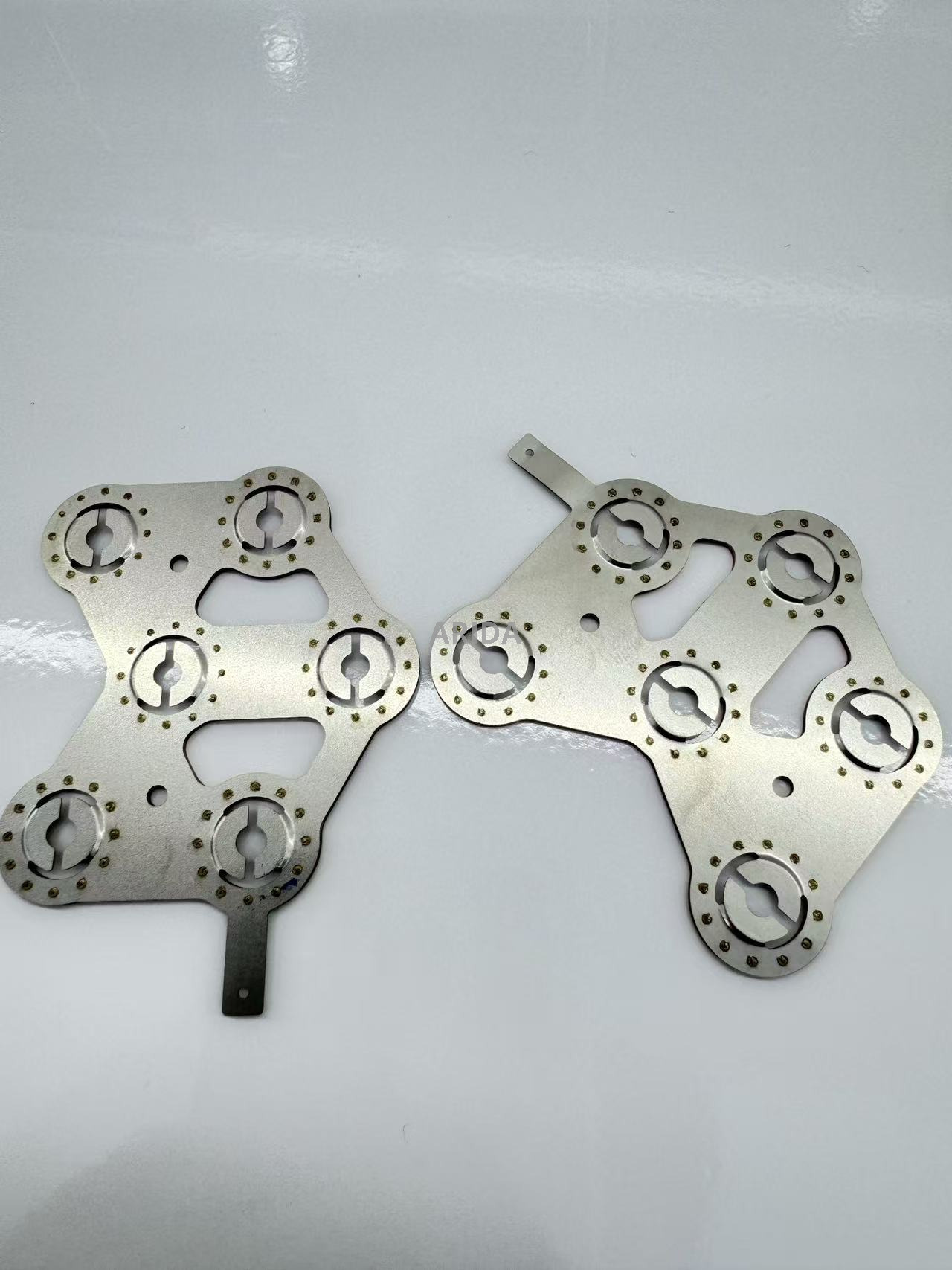
Engineers deploy these advanced composites in various physical iterations. You might use highly flexible composite battery tabs for compact pouch cells. These thin profiles bend easily during pack assembly. Alternatively, large cylindrical formats like 4680 cells require rigid, heavy-duty copper nickel busbar designs. The chosen geometry depends entirely on your module space constraints and specific cell spacing requirements.
Direct BMS Integration
Replacing fragile "spaghetti wiring" drastically improves pack safety. Manufacturers now use custom-stamped bimetallic connections to replace loose wires. These rigid components mount directly onto printed circuit boards (PCBs). However, you must prevent the copper from pulling heat away too rapidly during the PCB soldering process. Engineers utilize custom "thermal relief" designs to solve this. They cut narrow neck graphics into the metal to restrict rapid heat flow. This ensures perfect solder joints without accidentally cooking the underlying battery cell.
Sealing & Tab Gel Compatibility
High-power pouch cells often use internal tabs thicker than 0.2mm. These thicker metal strips demand specialized edge treatments to prevent accidents. You must use side-trimmed edges to remove sharp manufacturing burrs. Furthermore, they require high-grade insulating sealing tapes. Multi-layer "white glue" polypropylene films perform best here. They withstand much higher thermal-sealing operation windows. They effectively prevent foil puncture, stop moisture ingress, and eliminate long-term swelling risks.
Assessing Scalability and Manufacturing Efficiency
Material Yield vs. Scrap Reduction
High-volume production environments demand absolute reliability. Standard single metals frequently cause severe manufacturing bottlenecks. While standard copper seems appealing on paper, it frequently causes sudden weld failures on the assembly line. Utilizing a bimetallic battery connector generates near-zero weld failures. You vastly reduce unpredicted machine downtime. You throw away far fewer expensive battery cells due to bad, spattering welds.
Lifecycle Longevity
We must frame production scalability around total cycle life. Lower internal resistance generates significantly less heat during operation. You require less active liquid cooling inside the battery pack. This preserves the delicate chemical balance of the cells over thousands of cycles. It dramatically reduces warranty claims for the entire EV battery interconnect system. A cooler pack is always a longer-lasting pack.
Shortlisting Logic
Selecting the right metal requires understanding your exact application. Here is a clear logical framework for your engineering team:
Use Pure Nickel if: You are building low-draw devices for harsh environments. Medical monitors and basic consumer electronics fit this profile perfectly.
Use Bimetallic Composites if: You are engineering high-C-rate discharge packs. They excel in automated electric vehicle modules. They also perfectly support scalable energy storage racks facing extremely tight thermal budgets.
Avoid Nickel-Plated Steel if: You are building anything beyond a basic, low-current prototype. It is unsafe for heavy power draws.
Conclusion
Copper-nickel bimetallic solutions bridge the vital gap between thermal necessity and automated manufacturing reality. They balance extreme current carrying capacity alongside everyday production line reliability. They provide the ultimate conductive highway for modern energy storage.
We recommend auditing your current failure rates in pack welding immediately. Run extensive thermal imaging on your existing single-metal busbars under peak operational loads. Finally, request sample bimetallic coupons to validate your laser-weld parameters. Stop compromising on your high-power pack designs today.
FAQ
Q: What is the difference between nickel-plated copper and copper-nickel bimetallic tabs?
A: Plating is a micro-thin surface treatment. It easily flakes off under mechanical stress or deep welding penetration. Bimetallic composites involve thick, structurally significant material layers. They are metallurgically bonded together permanently to handle high current flows and aggressive, automated welding environments safely.
Q: Can you weld copper-nickel bimetallic tabs with standard resistance spot welders?
A: Yes, you can. The top nickel layer creates the necessary electrical resistance. It generates a perfect localized weld nugget without issue. You do not need the massive power spikes or specialized equipment normally required to weld pure copper components.
Q: What are the common thickness and width specifications for EV battery interconnects?
A: Widths typically range from 3mm to over 10mm. This depends entirely on your specific cell spacing. Total composite thicknesses usually fall between 0.1mm and 0.3mm. Mega-scale vehicle packs frequently require custom sizing and unique stamping.
Q: Does a bimetallic tab require special tab gels for pouch cells?
A: Yes, they often do. High-power tabs require advanced multi-layer PP films. Industry experts commonly refer to these as "white glue." They withstand higher thermal-sealing operation windows safely. They also prevent sharp edge-shorting and stop moisture-induced battery swelling.