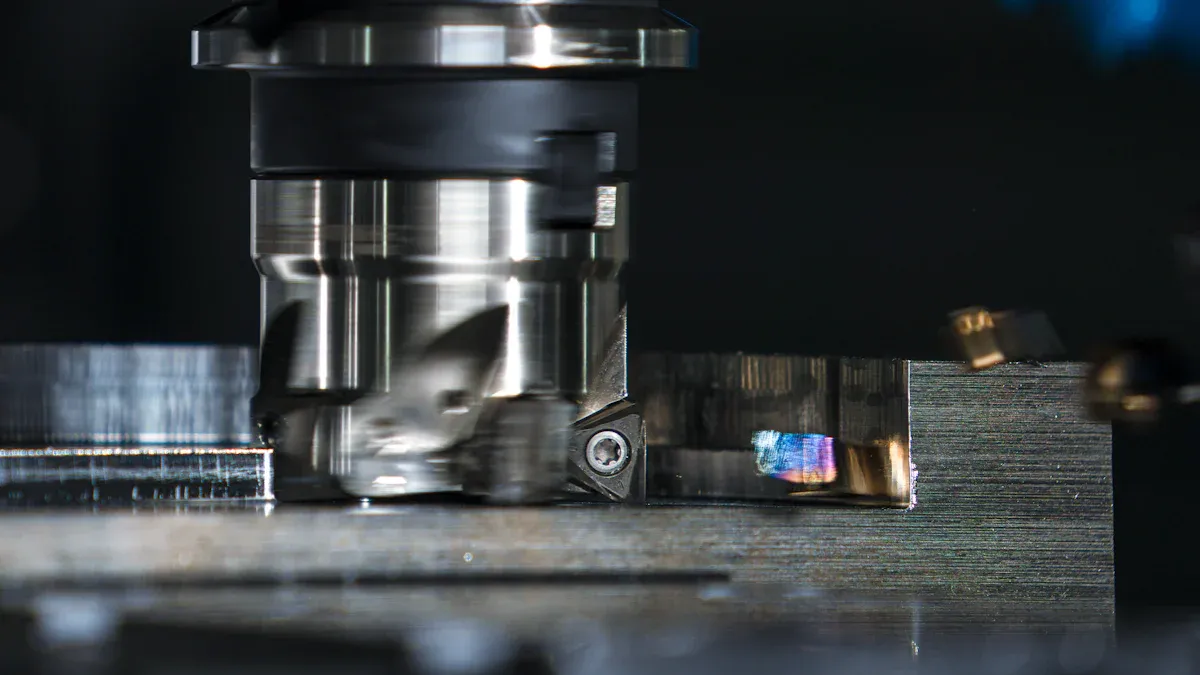
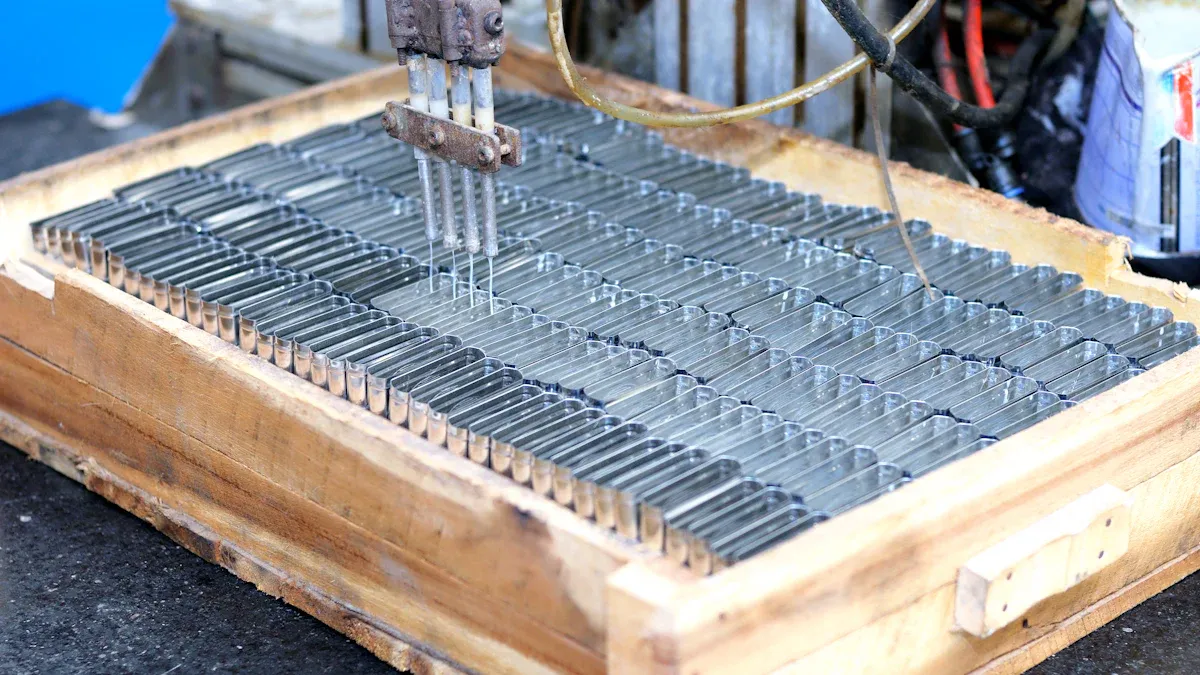
You can see how high-speed stamping machines change metalwork. These machines help you make exact parts fast and with less work. They are important in factories because they increase output and keep quality good.
Stamping Method | Speed (SPM) | Production Volume (components/month) |
High-Speed Stamping Presses | 200 to over 1,500 | Over 150 million |
Traditional Stamping Presses | 10 to 200 | N/A |
Modern factories use these machines to cut down waste. They make each step easier and faster. New technology, like real-time monitoring, makes them even more useful in busy industries today.
Key Takeaways
High-speed stamping machines make parts very fast. They can reach up to 2,000 strokes each minute. This helps factories fill big orders quickly and easily.
These machines use less material and make fewer mistakes. They make sure every part is the same size and shape.
Buying high-speed stamping machines can help save money. You spend less on energy and tools. This makes making things cheaper.
Automation in these machines checks quality as parts are made. This means workers do not need to check by hand. It helps everything run better.
Picking the best stamping machine for your needs is important. It helps you make more parts and keep them high quality.
What Are High-Speed Stamping Machines?
Definition and Core Features
High-speed stamping machines are special tools. They help shape metal fast and with accuracy. These machines use presses that move up and down quickly. You often find them in big factories. Factories need to make many parts fast. High-speed stamping uses these machines to make metal parts faster than older ways.
High-speed stamping machines use crankshaft mechanisms like traditional presses. But they work much faster. The parts are hardened so they last longer. Automation features help save time and effort.
Here is a table that shows the main features of high-speed stamping machines:
Feature | Description |
Technical Definition | High-speed stamping is a manufacturing process that allows for faster production of parts using specialized presses. |
Core Mechanical Features | Includes types of presses (mechanical and hydraulic), operational mechanisms, and advantages in speed, precision, and automation. |
Mechanical Stamping | Powered by a motor-driven flywheel, allowing high-speed, high-force stamping with consistent strokes. |
Hydraulic Stamping | Uses pressurized fluid for controlled pressure, allowing flexibility in shaping and stamping. |
Tool Wear | Increased wear on tools due to frequent use, requiring specific technologies for quality results. |
Stock Feeding | Challenges in feeding stock at high speeds, necessitating specific materials and techniques. |
Scrap Removal | Significant scrap metal production requiring efficient removal to maintain system operation. |
Heat Management | Excessive heat generation necessitating heat-resistant tooling and consideration of material properties. |
There are two main types of high-speed stamping. Mechanical presses work at set speeds. They are good for making lots of the same part. Hydraulic presses give more control. They can stop during a stroke. This helps when you need to change things.
How They Improve Metalwork
High-speed stamping machines make metalwork easier and quicker. These machines can reach up to 2,000 strokes each minute. You get more parts in less time. This helps you fill big orders fast. High-speed stamping keeps every part the same size and shape. You do not have to worry about mistakes.
Here is a table that compares high-speed stamping machines to conventional stamping presses:
Feature | High-Speed Stamping Machines | Conventional Stamping Presses |
Cycle Time | Significantly reduced | Longer |
Material Waste | Lower | Higher |
Production Rate | High | Moderate |
Complexity of Geometries | Capable of complex designs | Limited |
Precision Control | Enhanced | Standard |
Automation | Yes | Limited |
High-speed stamping gives you faster cycles and less waste. You can make complex shapes with better accuracy. Automation means less manual work. This saves money and effort.
High-Speed Stamping Explained
High-speed stamping uses presses that work much faster than regular ones. You get hundreds or thousands of cycles each minute. This helps you make many parts quickly. It is great for car and electronics industries.
Precision is important in high-speed stamping. If parts are not the right size, you can have problems. You need presses that keep tight tolerances. This makes sure every piece fits well. High-speed stamping uses advanced controls and sensors to help.
There are some differences between high-speed stamping and traditional stamping:
Aspect | High-Speed Stamping | Traditional Stamping |
Production Speed | High (several hundred to thousands of strokes per minute) | Moderate to Low (fewer strokes per minute) |
Precision and Consistency | Very high due to advanced automation and precise control | Variable depends on machine type and operator skill |
Flexibility in Design | Limited, best suited for standardized high-volume parts | Higher flexibility, suitable for custom and complex designs |
Material Utilization | Efficient use of materials, minimal waste | More material waste compared to high-speed stamping |
Applications | Ideal for high-volume production (automotive, electronics) | Suitable for low to medium-volume production |
You use high-speed stamping when you need many parts that look and work the same. You get better quality, less waste, and faster results. High-speed stamping machines help you keep up with modern manufacturing needs.
Benefits of High-Speed Stamping
Productivity and Speed
High-speed stamping helps you make more parts quickly. These machines work much faster than older ones. You see cycle times get shorter. Production rates go up. High-speed stamping machines can do five times more strokes per minute than regular presses. This means you finish jobs faster. You can meet tight deadlines easily.
You can make lots of parts fast.
You get more work done in every shift.
You can make tricky parts for cars and electronics.
Manufacturers say they get much better efficiency. Smart sensors and real-time monitoring help machines run well. You spend less time fixing problems. You spend more time making parts. Car makers use high-speed stamping to make light and complex parts for electric cars. These machines help you keep up with what people need.
Tip: Pick machines with smart sensors and automatic quality checks. These features help you find problems before they slow you down.
Cost Efficiency
High-speed stamping helps you save money. The process uses energy better than older machines. Servomechanical presses only use energy when needed. This cuts energy use by about 30% compared to hydraulic presses. New systems can change pump speeds to save even more energy.
You also save money and get products out faster. Tooling costs can be as low as $3,000. This is much less than older ways. The fourslide process can make tooling twice as fast. You spend less on tools and changes. Sometimes you save 30 to 50 percent compared to progressive dies. Some programs have saved up to $100,000 just on tooling.
You spend less on energy and materials.
You get more work done with faster cycles.
You save money and get products out faster with shorter wait times.
Cost Factor | Traditional Stamping | High-Speed Stamping |
Tooling Cost | High | Low |
Energy Consumption | High | Low |
Lead Time | Long | Short |
Revision Cost | High | Low |
High Quality and Precision
High-speed stamping gives you better part quality. These machines make parts with tight sizes and shapes. You can make over 1,000 pieces each hour. Every piece looks the same. High-speed stamping often skips extra steps. You finish jobs faster.
Compound die stamping lets you cut or punch parts at once. You get exact shapes and repeatable results. Progressive metal stamping gives you fast production and steady results every time. Advanced quality checks look at each part. You know every piece meets strict rules.
You get more work done with fewer mistakes.
You keep quality high for big jobs.
You meet the needs of car and airplane makers, where accuracy matters.
Note: High-speed stamping helps you avoid mistakes that cause problems. You can trust these machines to make good parts every time.
How Stamping Presses Work
Stamping Process Overview
When you use high-speed stamping, you need a plan. The stamping process has many steps. Each step helps you get good results. Here is how you do it:
Design & Engineering: You make detailed part designs.
Tooling & Die Making: You build strong dies and tools.
Material Selection: You choose the best metal for your job.
Metal Stamping: You use servo-driven stamping presses to shape metal fast.
Post-Processing: You clean and finish the stamped parts.
Inspection & Quality Control: You check each part for accuracy.
Each stage helps you keep parts the same and precise. High-speed stamping lets you repeat these steps quickly. You make fewer mistakes.
Technology for Speed and Accuracy
High-speed stamping presses use new technology for speed and accuracy. You use servo-driven stamping presses for quick moves. These machines use robotics and automation to handle materials. They help line up everything just right. Smart manufacturing systems let you watch every step as it happens.
Advancement | Benefits |
Automation and Robotics | Makes stamping faster, more exact, and saves money. |
Smart Manufacturing | Lets you check work in real time and fix problems early. |
AI-Powered Quality Control | Checks parts automatically and cuts down on waste. |
IIoT-Enabled Presses | Keeps presses working together and finds problems fast. |
Quick Die Change Systems | Lets you switch tools quickly and saves time. |
You use high-speed stamping technology to finish jobs faster. AI-powered quality control checks every part. IIoT-enabled presses keep things running well. Quick die change systems help you switch tools fast.
Tip: Use servo-driven stamping presses with smart sensors. This helps you make parts that are always the same.
Ensuring Consistent Results
You want every part to meet strict rules. High-speed stamping gives you ways to check quality at each step. You look at materials before you start. You use CAD and CAM systems to make sure dies are correct. In-process monitoring helps you track press force and speed.
Quality Control Method | Description |
Material Inspection and Verification | You check materials for problems before you start. |
Design and Tooling Accuracy | You use CAD and CAM to make sure dies are right. |
In-Process Monitoring and Control | You watch press force and speed to keep things steady. |
Dimensional Accuracy and Consistency | You measure parts and use SPC to keep them the same. |
Surface Finish and Part Inspection | You check the surface for marks and make sure it looks good. |
Functionality and End-Use Testing | You test parts to see if they work as they should. |
Employee Training and Involvement | You train workers to follow quality rules. |
Feedback and Continuous Improvement | You use feedback to make your stamping better. |
You measure each part to make sure it is the right size. You check the surface and test how parts work. You teach your team to follow good practices. You use feedback to keep making stamping better. High-speed stamping presses help you get good results every time.
High-Speed Stamping Applications
Automotive Components
High-speed stamping is used a lot in making cars. Car makers use it to make parts fast and with good accuracy. You get car parts that fit well and work right. These machines make small, detailed parts for important places in cars. They help make sure parts are strong and do not break. You do not have to worry about wrinkling or tearing.
High-speed stamping machines help factories work faster.
You get fewer mistakes and do not need to fix as much.
This saves money and cuts down on wasted materials.
You can make hard shapes in one step, so you do not need extra work.
High-speed stamping helps car makers build lots of cars quickly. You keep the parts good and save money.
Electronics and Appliances
High-speed stamping is used in electronics and home appliances. These machines make battery contacts, switch contacts, and relay parts. They also make shields, clips, tabs, latches, brackets, and plates. You use high-speed stamping for breaker boxes, outlets, dishwashers, microwaves, security systems, heating and cooling, generators, and car electronics.
Cameras, cleaning robots, computers, audio devices, AR devices, kitchen tools, microphones, sensors, smartwatches, and video doorbells all use stamped parts.
You make more parts faster and with better accuracy.
You save money by making less scrap and needing fewer fixes.
You can use many types of materials, so stamping is flexible.
Machines last a long time, so you do not spend much fixing them.
You help the planet by making less waste and using less energy.
High-speed stamping lets you make lots of electronic and appliance parts quickly. The parts are always good quality.
Aerospace and Other Industries
High-speed stamping is used in airplanes and other fields. In aerospace, you make important parts with great accuracy and speed. You follow strict rules and make parts for planes and engines.
Industry | Typical Applications |
Automotive | Body panels, brackets, and parts for making lots of cars. |
Aerospace | Parts for planes, engines, and inside systems, made light and strong. |
Electronics | Connectors, circuit board parts, and cases made with care. |
Medical Device Manufacturing | Parts for surgery tools, test machines, and implants, kept very clean. |
Construction | Big building parts, fasteners, and supports for big jobs. |
Consumer Goods | Appliance and tool parts, made strong and nice looking. |
Telecommunications | Parts for network gear and phones, made with care and in large numbers. |
Renewable Energy | Parts for solar panels and wind turbines, made light and tough. |
Agriculture and Farming | Tractor and irrigation parts, made to last in tough places. |
Defense and Military | Exact parts for vehicles and weapons, made to strict rules. |
Marine Industry | Boat and platform parts, made to not rust. |
Packaging Industry | Metal parts for machines and containers, helping the environment. |
Furniture Manufacturing | Brackets and frames for furniture, made strong and nice. |
Automotive Aftermarket | Extra parts for cars, made to fit and work well. |
Custom Manufacturing Solutions | Special designs for different needs, made for each job. |
You use high-speed stamping to make parts fast and with good detail. You waste less material and keep every part the same. High-speed stamping is used for medical tools, building parts, home goods, phone gear, green energy, farm tools, defense, boats, packaging, furniture, and special jobs.
High-speed stamping helps many industries, like cars, planes, electronics, and medical tools.
Choosing High-Speed Stamping Machines
Key Selection Factors
When picking high-speed stamping machines, you should think about a few things. The body material of the machine is very important. It helps your stamping presses stay accurate. You want a machine that is strong and steady. This keeps every part the same size and shape. How the machine is built matters a lot too. Good assembly helps the machine work well. It is half of what makes the machine successful. You also need to think about maintenance. If you take care of your machine often, it will work better and last longer.
Factor | Description |
Body Material | The material of the body is crucial for ensuring the accuracy of the stamping machine. |
Rigidity and Stability | The rigidity and stability of the body significantly influence the accuracy of the press. |
Assembly Quality | The quality of the assembly process is critical, accounting for fifty percent of the machine's success. |
Maintenance Requirements | Proper maintenance is essential to maintain high accuracy, impacting normal production. |
Tip: Always look at the body material and how well the machine is put together before you buy stamping presses.
Matching Machine to Needs
You should pick a high-speed stamping machine that fits your job. If you need lots of parts, high-speed stamping is best. You save time and finish big orders quickly. The type and thickness of metal you use matters. Softer metals like aluminum can be stamped faster. Harder metals like stainless steel need more control. Thick metals may need hydraulic stamping presses for extra power. Lighter metals work well with mechanical presses.
Criteria | Mechanical Press | Hydraulic Press | Mechanical Servo Press |
Production Speed | Fastest for simple geometries | Flexible, not speed-dependent | High speed with adaptability |
Best Use | Automotive, appliance, hardware items | Deep, complicated shapes | Wide range of dies and component types |
Specifications | High punching pressure, simple shapes | Variable stroke and pressure | Programmable stroke and speed |
Maintenance | Generally lower maintenance | May require more maintenance | Moderate maintenance |
High-speed stamping is great for making lots of parts. You get your work done faster and use less time. Always think about your metal and how many parts you need to make.
Tips for Quality and Precision
You want your high-speed stamping machines to make good parts every time. Use smart ways to keep quality high. Try SPC techniques to watch for changes in your process. Change stamping settings for speed, pressure, and material. Use automation to help stop mistakes. Check your process often to find ways to do better. Buy strong tools that last a long time. Check and set your tools often. Watch part sizes while you work so you can fix problems fast.
Best Practice | Description |
Apply SPC techniques | Monitoring variations in processes to identify potential issues early. |
Optimize stamping parameters | Adjusting the settings for speed, pressure, and material to enhance efficiency and quality. |
Implement automation | Utilizing robotics to streamline processes and reduce human error. |
Continuous analysis | Regularly reviewing production processes to identify areas for improvement. |
Invest in durable tooling | Using high-quality materials that resist wear to maintain precision over time. |
Routine maintenance | Regular checks and calibrations to ensure tools remain within tolerance specifications. |
Continuous monitoring | Tracking part dimensions during production for immediate corrective actions. |
You need to keep up with maintenance. Make a plan to check your machine often. Write down all the work you do. Teach your team how to stay safe. Check oil levels and change oil when needed. Look for leaks and clean oily parts. Make sure pressure settings are right. Check wires and gears. Look at the base and frame of your stamping presses.
Note: Checking your machine often helps it run well and stops big problems from happening.
High-speed metal stamping machines help make metalwork faster and easier. They also help you get more precise results. Picking the right machine helps you work quicker. It also helps you make better parts. Here are some main benefits:
Benefit | Description |
Increased Production Speed | You can make more parts fast and deliver on time. |
Cost-Effectiveness | You save money by making lots of parts at once. |
Enhanced Durability | Your stamped parts last longer and work well. |
Versatility in Design | You can make tricky shapes for different jobs. |
You work better and keep your parts good.
You help car, electronics, and airplane companies.
Using high-speed stamping machines helps you do well in manufacturing. You get better results and stay ahead.
FAQ
What materials can you use with high-speed stamping machines?
You can use metals like aluminum, copper, steel, and brass. Some machines work with thin sheets. Others handle thicker materials. Always check the machine’s specs before you start.
How do you keep high-speed stamping machines running well?
You should clean and inspect your machine often. Check oil levels. Replace worn parts. Train your team to spot problems early. Regular care helps your machine last longer.
Can you make custom shapes with high-speed stamping?
You can create many shapes. Complex designs work best with the right dies. Some machines handle tricky patterns. Talk to your supplier about your needs.
Are high-speed stamping machines safe to use?
️ You stay safe by following rules. Use guards and sensors. Train workers to use machines correctly. Always wear safety gear. Safety checks help prevent accidents.