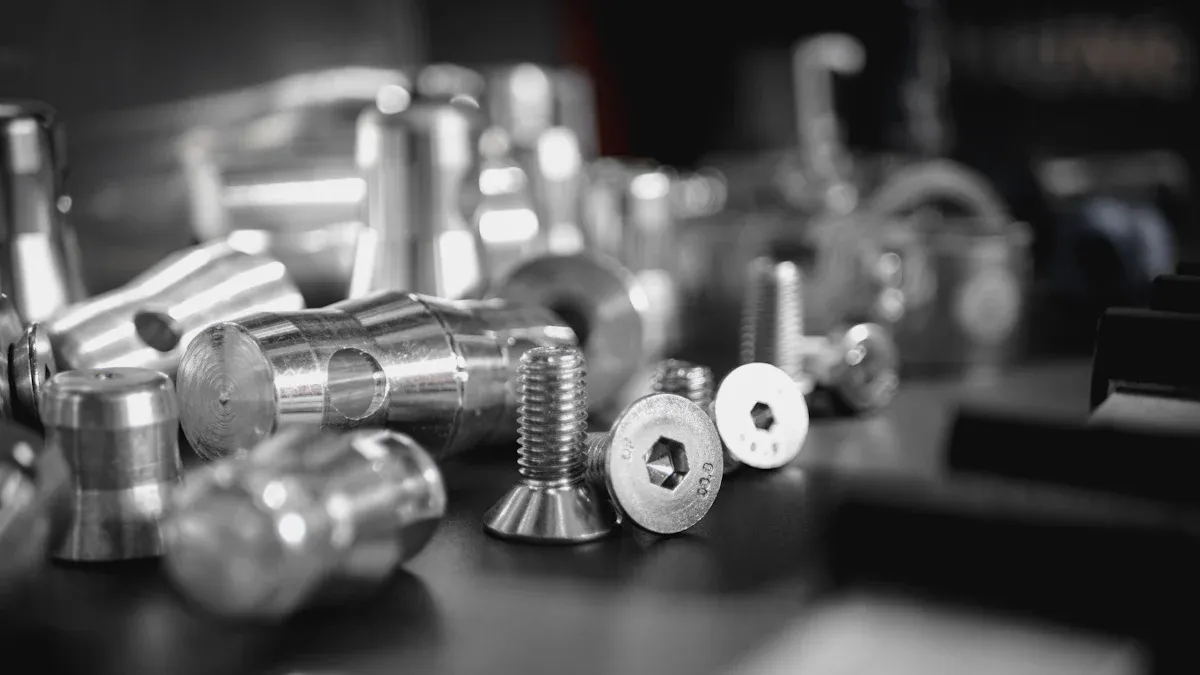
Precision stamping parts help you save money. They make work faster and cut down on waste. In aerospace, you save a lot by using precision stamping instead of old ways. Automation helps lower labor costs and stops extra material from being used. You can change what you make quickly if the market changes. Making smaller batches is easier. Companies using precision stamping parts control costs better. They also make things more exact. You get real savings with these smart methods.
Tip: Precision stamping uses less material and makes work faster.
Key Takeaways
Precision stamping parts help save money. They do this by making less waste. They also make production faster.
Better designs use simulation tools. This makes parts stronger. It also lowers the cost of materials.
Automation in production lowers labor costs by 25%. It also makes work more efficient.
Picking the best materials saves money. Working with suppliers closely helps save even more.
Good quality control stops defects. This helps save money overall.
Precision Stamping Parts Overview
What Are Precision Stamping Parts
Precision stamping parts help make metal pieces with exact shapes. This process uses flat metal sheets and turns them into special forms. You can make things like terminals, connectors, brackets, and shields. Dies and presses cut, bend, or shape the metal. Precision metal stamping makes parts that are very accurate and always the same. You use less material, so you waste less and save money. The process is fast and lets you make lots of parts quickly. Precision metal stamping makes parts harder and stronger. These parts last longer.
Note: Precision metal stamping helps you make parts that always fit together just right.
Characteristic | Description |
Precision | Makes parts that are very accurate and always the same |
Efficiency | Makes lots of parts fast, often with machines |
High material use | Uses most of the material, so you waste less |
Consistency | Every part is the same size and shape |
Versatility | Lets you make many different kinds of parts |
Mechanical properties | Makes parts harder and stronger |
Wide applications | Works for things that are hard to make in other ways |
Industry Applications
Precision metal stamping is used in many industries. In cars, it makes brackets, panels, and frames that help keep people safe. It is important for making sensors, powertrains, and electrical systems. In airplanes, it makes brackets, bushings, and clips. These parts must be very safe and high quality. Precision metal stamping can make hard shapes in one step. This saves time and money. You also see it in electronics, where it makes connectors and shields. Medical devices use it for tools and probes. Appliances like dishwashers and ovens need stamped brackets and covers to work well.
Automotive: Terminals, connectors, and strong parts for safety.
Aerospace: Brackets and clips that are tough and precise.
Electronics: Connectors and shields for tricky designs.
Medical: Tools and probes that must be perfect.
Appliances: Brackets and covers for good performance.
Precision metal stamping helps save money, especially when you make lots of parts. Car companies can save up to 30% on each part by using progressive stamping. In airplanes, you get faster production and better parts. Precision metal stamping makes sure every part is accurate and strong.
Cost Reduction Strategies
Design Optimization
You can save money by making designs better. Simulation tools help you test parts before making them. You see how parts handle stress and fatigue. This makes precision stamping parts stronger and last longer. You use less material and make things easier to build. Virtual testing means you do not need many real prototypes. Products get to stores faster.
Benefit | Description |
Better Performance | Simulation tools check stress and fatigue for strong parts. |
Cost Savings | Good designs use less material and make building easier. |
Faster Time to Market | Virtual tests mean fewer real prototypes and quicker development. |
Progressive die stamping combines steps in one run. This makes work faster and keeps parts accurate. Fine blanking gives you clean cuts for high-precision parts. Computer-aided design helps you make better tools. CAD lets you fix mistakes and use less material. You get parts with tighter tolerances and better accuracy.
Aspect | Impact |
Tooling Design | CAD helps make tools that lower mistakes and waste. |
Cost Savings | Better designs cut costs when making parts. |
Production Efficiency | Improved designs make production faster and smoother. |
Quality of Components | Precise tools give you better parts with tight tolerances. |
Tip: Making designs better helps you use less material and get stronger parts.
Tooling Efficiency
Tooling efficiency helps you save money in stamping. Using good tooling materials makes tools last longer. You pay less for repairs. Steel tools are stronger and more exact than soft ones. Hardened steel tools are best for making lots of parts. They last longer and keep parts the same.
Tooling Material | Benefits | Cost Implications |
Steel Tools | Stronger and more exact than soft tools. | Longer life and better parts save money. |
Hardened Steel Tools | Best for lasting long and making many parts. | Needed for fast work and keeping parts the same. |
Keep your tools clean and use the right oils. This makes tools last longer and saves money over time. Good tooling and process steps keep stamping working well. You also make sure parts meet strict rules for precision.
Note: Good tools break less and make better parts every time.
Automation in Production
Automation changes how you make stamped parts. You need fewer people and make fewer mistakes. Machines work faster, so you make more parts. Quality stays the same. Many companies say automation cuts labor costs by 25% for each part. You save money by wasting less, paying less for workers, and stopping delays.
Automation means fewer people and fewer mistakes.
Machines work faster and make more parts.
You save money by cutting waste and labor costs.
Labor costs drop by 25% after using automation.
Most machines cost less than $50,000.
Companies get their money back in 12–24 months.
Fast stamping presses make parts quickly and waste less material.
More companies use full automation now, showing a big change.
Precision stamping tools make work faster and better. You get shorter times and make more parts. Stamping is a fast way to make things, so you finish many pieces quickly. Working with a stamping partner helps you set up machines. This keeps parts accurate and quality high.
Tip: Automation lets you make more parts faster and saves money on workers.
Precision Metal Stamping Process
Advanced Technologies
New technology is changing precision metal stamping. Simulation software lets you test designs on computers first. This helps you use less material and save money. IoT integration finds problems early. Machines send data right away, so you can fix things fast. High-speed stamping presses work quickly. They make thousands of parts that are all the same. These presses lower labor costs and help you sell products faster.
Servo-driven presses give you better control. You can shape hard parts and use strong metals like titanium. These presses use less material and make less waste. You get good results with less work. Many companies use machine vision systems to check every part. These systems measure blanks on a conveyor. They help you keep quality high even when making parts fast.
Technology | Benefits |
Simulation Software | Fewer prototypes, less waste, faster work |
IoT Integration | Early problem detection, better quality |
High-Speed Stamping | Fast production, lower costs, accuracy |
Servo-Driven Presses | Complex shapes, less waste, strong metals |
Tip: Advanced stamping technology helps you make more parts with less waste and better precision.
Quality Control
Strong quality control keeps defects low in precision metal stamping. Statistical process control (SPC) tracks data during production. You find problems early and fix them before they get worse. SPC helps you make less scrap and do less rework. Many factories see defect rates drop by over 30% after using SPC. You also make more parts and save money.
Failure Mode and Effects Analysis (FMEA) helps you find risks before they cause trouble. Real-time data systems watch every step and help you change things quickly. Automated feedback loops adjust machines to keep stamping working well. You check every part against strict rules, like PED and ITAR, to make sure quality stays high.
Step | Description | Cost Influence |
Die and Tooling Setup | Strong dies shape metal accurately | Fewer adjustments, lower costs |
Stamping Press Operation | Press shapes metal with controlled force | Less waste, fewer mistakes |
Material Flow Control | Metal moves into die with precision | Fewer errors, more savings |
Quality Control | Measure tolerances in microns | Less rework, lower expenses |
High Volume Production | Make thousands of parts with no loss in quality | Lower per-part cost, better efficiency |
Real-time monitoring finds problems fast.
SPC predicts trends and stops defects.
Proactive checks keep parts the same.
Automated inspection equipment helps you keep quality high and costs low.
Note: Good quality control in stamping means fewer mistakes and more savings.
Material Selection and Supplier Collaboration
Choosing Materials
You can lower your production costs by picking the right materials for your precision stamping parts. Start by thinking about how the part will be used. If you choose a material that is too strong or rare, you might spend more than you need. For most jobs, regular carbon steel works well and costs less than stainless steel. You should also look at the thickness and width of the metal. Thicker or wider sheets cost more and may create extra waste.
Tip: Design your parts to use less material and avoid shapes that are hard to make. This helps you save money and makes production faster.
When you select materials, keep these points in mind:
Work with material experts to find options that meet your needs and budget.
Build strong relationships with suppliers for steady and reliable sourcing.
Think about long-term costs, not just the price you pay today.
Use as much of each sheet as possible to cut down on waste.
Choose materials that support your company’s sustainability goals.
You can also follow these steps to get the best value:
Balance short-term savings with how long the part will last.
Avoid rare alloys unless your design truly needs them.
Plan your layouts to get more parts from each sheet.
Buy materials when prices are low.
Material Factor | Impact on Cost and Performance |
Material Type | High-grade metals cost more than basic steel |
Thickness/Width | Thicker or wider sheets increase expenses |
Market Fluctuations | Prices can change quickly |
Design Simplicity | Simple shapes use less material and cost less |
Working with Suppliers
You can save even more by working closely with your suppliers. Good supplier relationships help you get better prices and higher quality. When you talk often with your suppliers, you can solve problems faster and plan for the future.
Build strong partnerships to get better deals and steady supply.
Negotiate for bulk discounts and longer contracts to lock in lower prices.
Work together on quality checks to keep your parts reliable.
Use demand forecasts to avoid buying too much or too little.
Try e-procurement tools to make ordering faster and easier.
You should also:
Choose suppliers who meet your quality standards.
Set up clear ways to talk and share feedback.
Work together on audits and quality goals.
Encourage suppliers to suggest new ideas.
Build trust for long-term success.
Note: Long-term supplier partnerships help you get better prices, steady quality, and more chances to save money.
You can save money in production by using precision stamping parts. Companies save a lot when they improve design, tooling, and automation. Look at your current steps and find ways to use less material. Try to make your products better. Here are some ideas:
Make lots of parts at once to work faster.
Pick easy designs so every part is the same.
Use machines to help you make parts quicker.
Begin now to make your production smarter and save more money.
FAQ
What are the main benefits of using precision stamping parts?
You get faster production, less waste, and lower costs. Precision stamping makes parts that fit perfectly every time. You can make many parts quickly and keep quality high.
How does automation help reduce production costs?
Automation lets machines do the work. You need fewer workers and make fewer mistakes. You save money on labor and materials. Production speeds up, and you get more parts in less time.
Can you use different metals for precision stamping?
Yes, you can use many metals like steel, aluminum, and copper. You should pick the metal that fits your needs and budget. Some metals cost more, but they may last longer.
How do you choose the right supplier for stamping parts?
Look for suppliers with good quality and fair prices. Build strong partnerships and talk often. Ask about bulk discounts and delivery times. Good suppliers help you save money and avoid delays.